Why Every Business Still Needs a Professional Website in 2026
Plenty of businesses run on social profiles and marketplace listings. That works until the day the algorithm changes or the account is suspended.
Every few years someone announces that websites are finished, replaced by social profiles, marketplaces or messaging apps. Every few years, businesses that took that advice discover what happens when a platform changes its rules or suspends an account without explanation.
A website is the only part of your online presence you actually own. That is still the strongest argument for having a good one, but it is not the only one.
Rented ground versus owned ground
Your social following, your marketplace reviews and your ad accounts all sit on someone else's infrastructure, governed by rules you do not set and cannot appeal effectively. They are excellent channels and terrible foundations.
Your website, your domain and your email list are yours. When a platform changes, a business built on owned ground adapts. A business built on rented ground starts again.
What separates a professional site from a brochure
Most underperforming business websites are not ugly. They are vague. Someone lands, cannot tell within a few seconds what is on offer or whether it is for them, and leaves. A professional site does four things reliably:
1. It answers the visitor's first question immediately
Not your company history. What you do, who it is for, and what happens next. If a stranger cannot summarise your business after five seconds above the fold, the rest of the page will not get read.
2. It is fast on a phone, on a mediocre connection
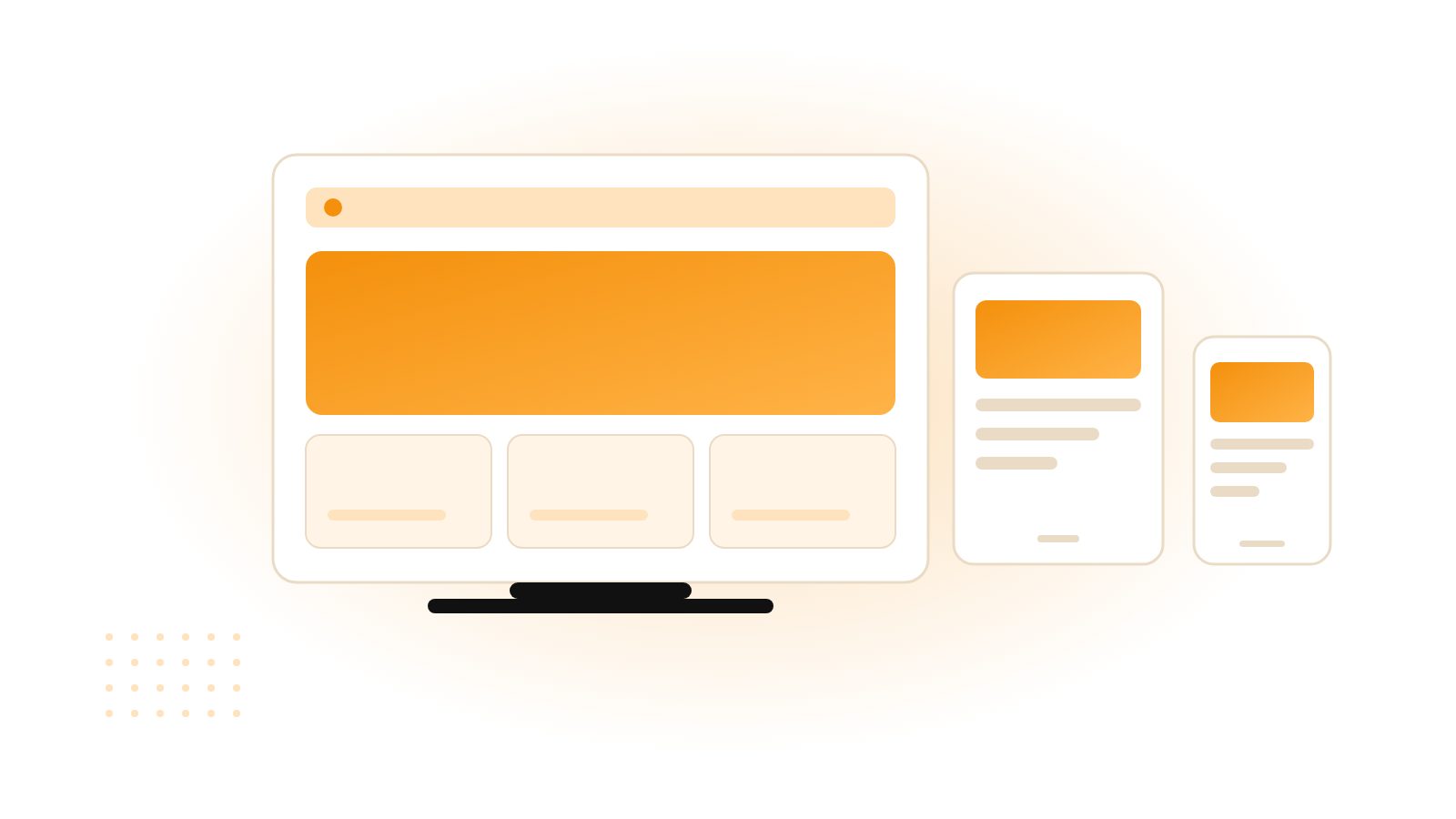
Most of your traffic is mobile and some of it is on poor signal. Speed is not a technical nicety; it is the difference between a visitor and a bounce. Heavy image files, unnecessary fonts and third-party scripts are the usual culprits.
3. It makes the next step obvious
One clear primary action per page, repeated where a reader is likely to be convinced. A site with eleven equally weighted buttons has no call to action at all.
4. It can be updated by the people who run the business
If adding a case study requires a developer, it will not happen, and the site will slowly go stale. Editable content is a business requirement, not a luxury.
The things that quietly cost you money
- No analytics or conversion tracking. If you cannot see which pages produce enquiries, every marketing decision is guesswork.
- Forms that fail silently. Broken enquiry forms are more common than anyone believes. Test yours today, from a phone, on mobile data.
- Thin service pages. One paragraph per service tells neither a customer nor a search engine anything useful.
- No proof. Reviews, named work, specifics. Claims without evidence read as noise.
- Unmaintained software. An out-of-date CMS is the most common way small business sites get compromised.
Does every business need a custom build?
No. A template site, chosen well and written carefully, beats a custom site with weak content every time. Custom development earns its cost when:
- Your service genuinely needs explaining through a tool, calculator or configurator
- The site has to talk to another system, such as your CRM or booking software
- Your brand is a real differentiator and a stock layout undercuts it
- You publish enough that editorial structure actually matters
Otherwise, spend the money on content and photography. It will do more.
What to fix first, if the budget is small
- Make the homepage say what you do. Free, and usually the biggest single improvement.
- Fix mobile speed. Compress images, remove unused scripts and fonts.
- Write one proper page per service. Enough detail that a buyer could make a decision.
- Add proof. Real reviews, real outcomes, real names where you have permission.
- Check every form and phone number. Then check them again from a phone.
That list costs very little and fixes most of what is wrong with most small business websites.
SEO is the result, not the starting point
Search visibility follows from a site that is fast, well structured and genuinely useful. Technical SEO work amplifies that; it does not substitute for it. Adding keywords to a page nobody wants to read does not produce rankings, and has not for a long time.
The conclusion
A professional website in 2026 is not about looking current. It is about owning the one asset in your marketing that cannot be taken away, and making sure it answers questions fast enough that people stay to ask the next one.
If you are unsure where yours stands, open it on your phone on mobile data and try to buy from yourself or enquire. Most of the honest answers surface within a minute.
Filed under Web Development. More on web and WordPress development and digital marketing.